It’s hard to believe we’re just a couple of weeks away from the start of the fall/winter CSA—and from the start of fall itself (the equinox is on 9/22). This cool, dry weather has been a blessing, though it’s also unusual for this time of year. Today (9/10) is usually peak hurricane season on the east coast, yet the Atlantic is quiet. Fingers crossed it stays that way. After Helene last year and Chantal this year, we feel like we’ve done our time and could use the break until next hurricane season.
Last year at this time, we were swimming in rain and mud—the scariest start to a fall CSA season we’ve ever had. The endless rain (even before Helene) brought soil disease, pest explosions, and weeds galore. Crops were melting into goo just as we were serving our largest CSA membership to date. For new members, it was a rough introduction. Still, we got through it with help from Open Door Farm, our value-added items, and the patience of our members.
The truth is, the first few weeks of CSA always start a little lean—not lean compared to grocery store produce, but lean compared to the abundance we like to provide. That usually means fewer choices and no multiples of a single item (like two heads of lettuce or two bunches of collards). But longtime members know that within a week or two (sometimes three), the harvest picks up steadily and the variety grows.
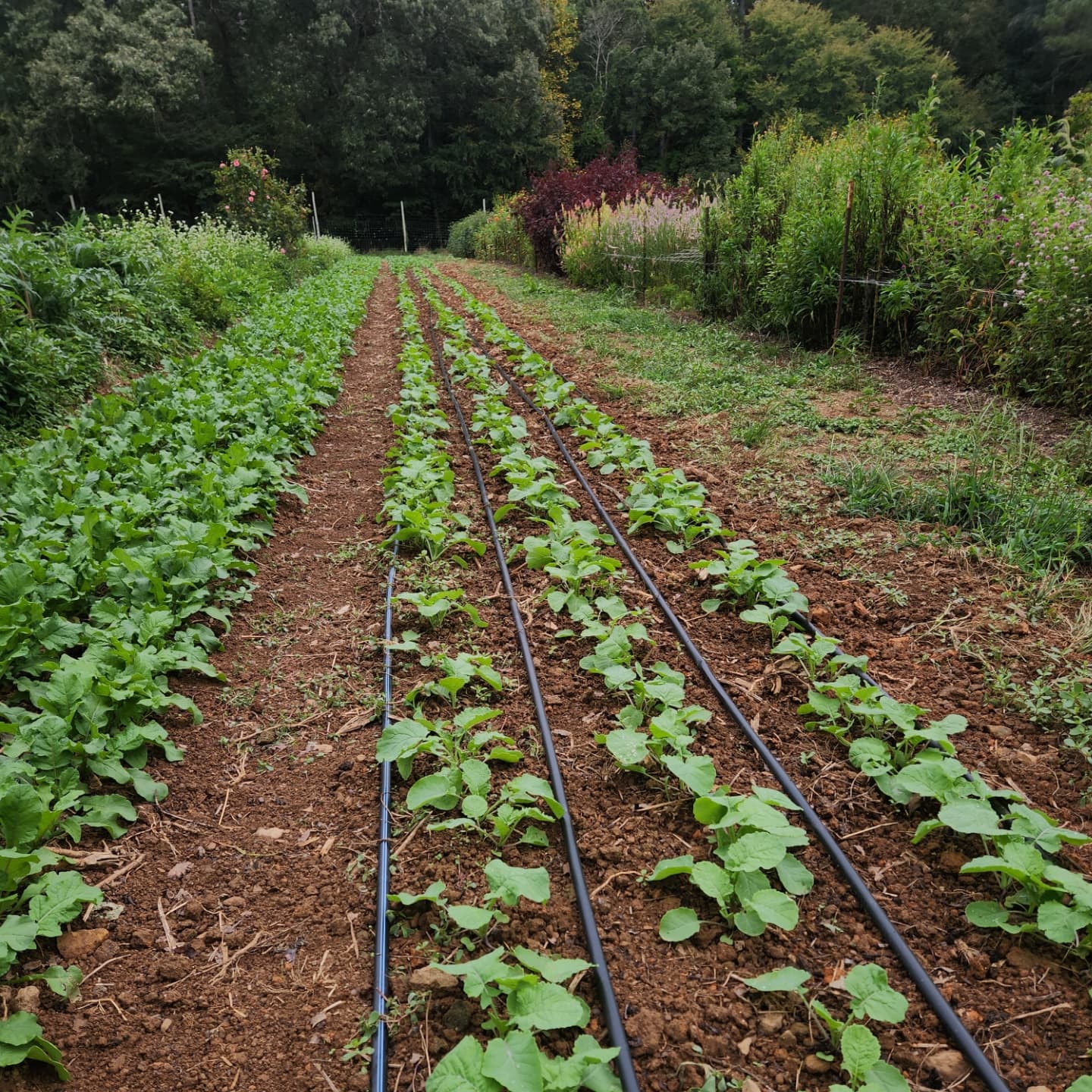
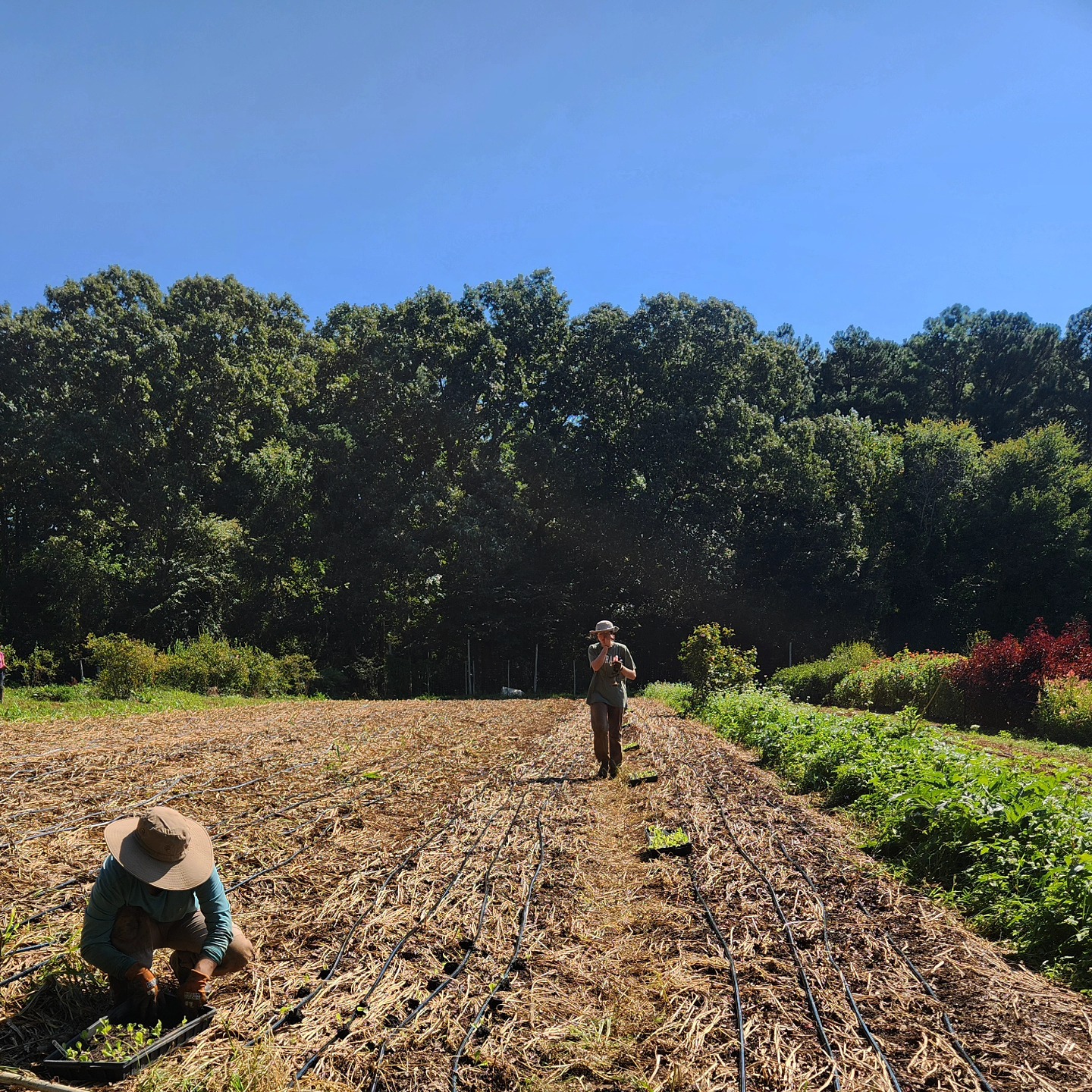
This year, we expect a modest start again. We ran into issues with our potting mix. For years we’ve used Vermont Compost for seedlings, but it’s pricey and shipped from far away. Hoping to support a local option, we switched to a North Carolina supplier. It was fine in the spring, but the fall batch was likely calcium-deficient. Our seedlings grew poorly, and by the time we realized, it was too late to fully correct. We’ve since invested in Vermont Compost again (about $1,000 worth) and supplemented the weaker seedlings with gypsum water to give them calcium before transplanting. Thankfully, most of the transplants are thriving now that they’re in the field with rain and good soil beneath them. Fingers crossed they keep growing strong.
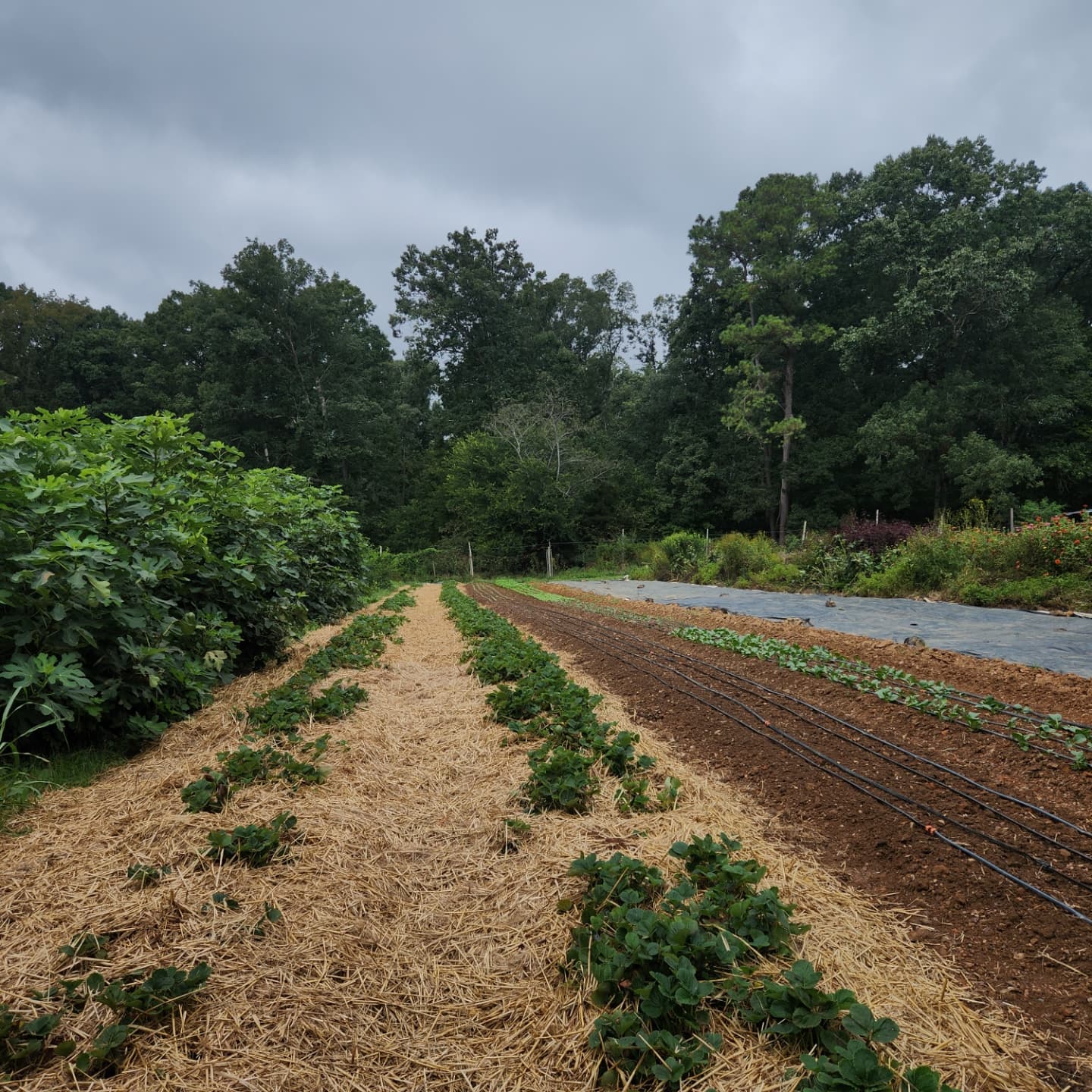
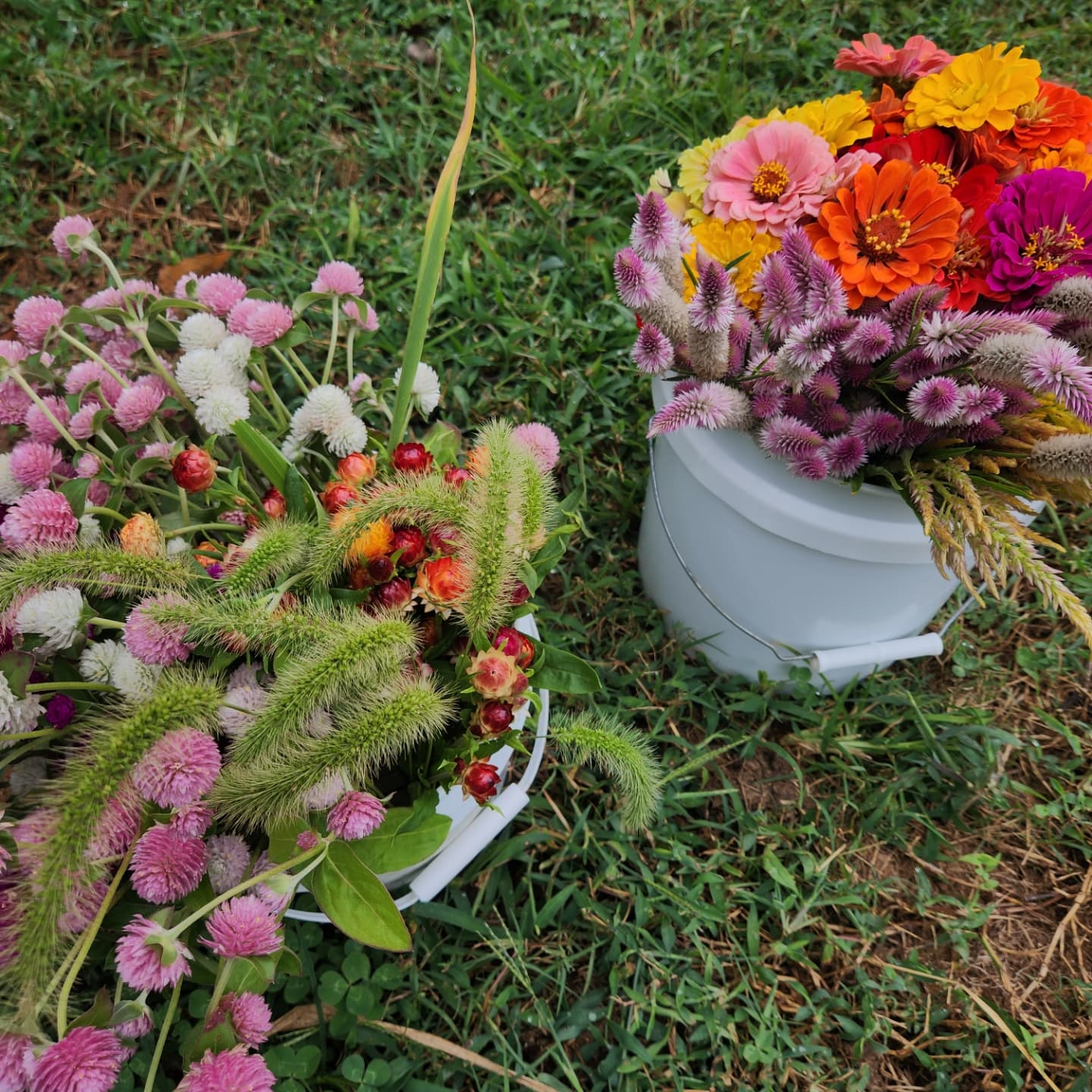
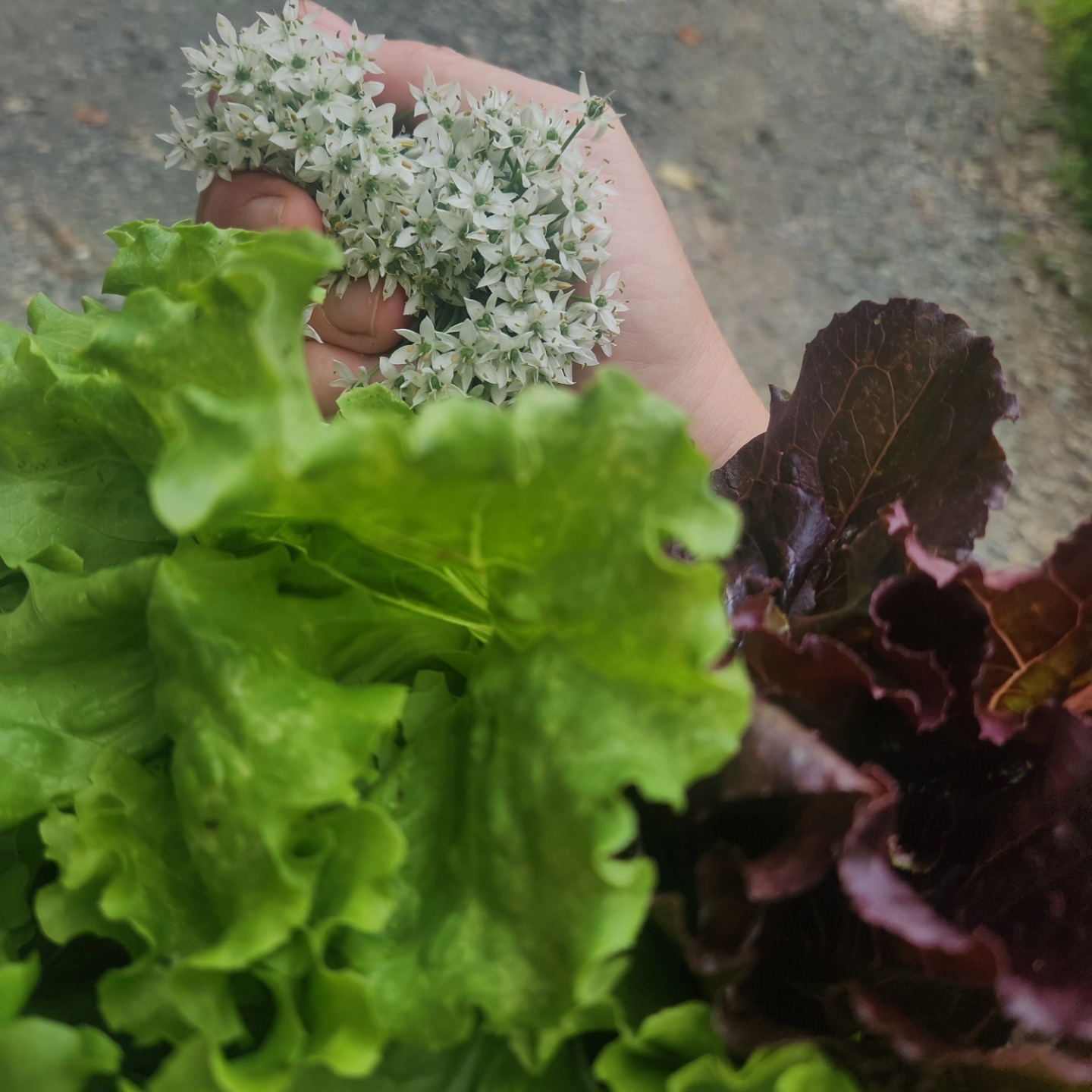
Despite these setbacks, we’ll have plenty of delicious produce for the first weeks of CSA: arugula, shallots, garlic, radishes, hakurei turnips, shishito peppers, sweet Italian frying peppers, bok choy, b-grade apples, herbs (basil, rosemary, thyme, oregano, tarragon), and possibly farm flower posies, figs, Irish potatoes, or onions from Open Door Farm. We’ll also have our finishing salts, healing salves, and herbal teas. As the season deepens, add-ons will become available for members who want more beyond their weekly (or biweekly) shares.
Meanwhile, we’ve been juggling other farm projects. There’s always equipment repair (tractors have a sense of humor about breaking down exactly when they’re needed), but the big project right now is our new seedling tunnel. Two years ago Ben graded the pad and set drainage. Last year, the crew added landscape fabric and gravel. This summer, they built the frame—just a few more parts to go before it’s finished. Next comes the end walls, side curtains, and finally plastic covering. Inside, Ben will build a potting area and a compost-heated bench for seedlings, plus we’ll dig a trench for plumbing and electric. Having irrigation and fans right in the tunnel—no more extension cords and hoses!—will be a big step up. If all goes as planned, we’ll have it finished by January.
Once CSA season kicks off, our focus shifts almost entirely to harvests, packing, and deliveries. So for now, we’re hustling to get as much in place as possible before the whirlwind begins.
 In Good Heart Farm